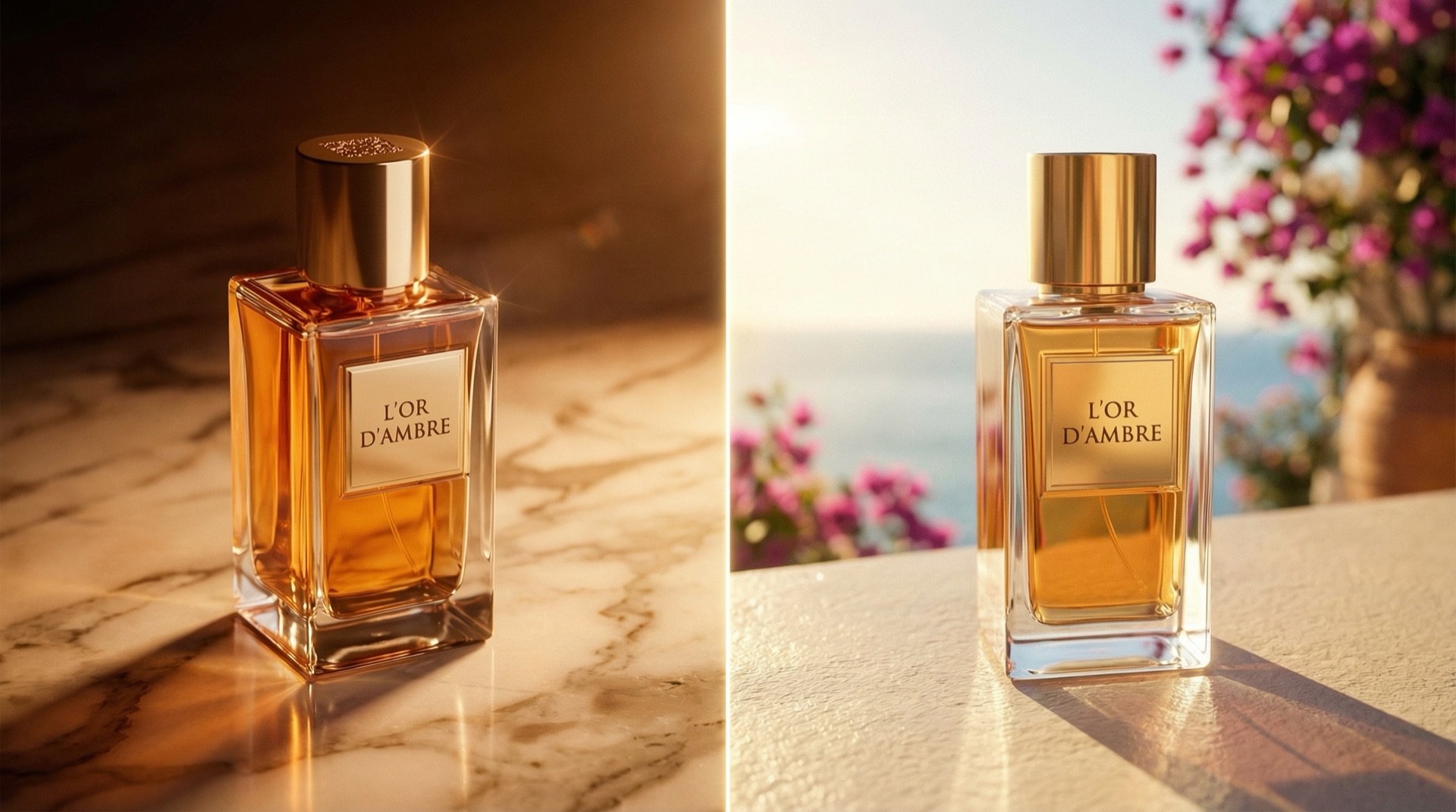
The core difference between the two approaches
A studio shoot records the product under real light, on a real surface, through a real lens. How the surface catches light, how texture is captured, how the shadow falls — these are physically accurate. An AI hybrid takes a single real shot as the base and multiplies the background, the light, and the scene with AI. So hybrid isn't inventing an image from scratch; it's carrying a correctly shot product into different scenes.
That distinction is critical. In an AI hybrid the product itself stays real and the world around it changes. In pure AI generation the product is also the model's interpretation, which is usually risky for a brand. The right question isn't "studio or AI", it's "how much real texture and how much scene flexibility does this product need". The answer changes from category to category.
Products where the studio is essential
In some categories nothing replaces a real shoot. Luxury products top the list: the reflection on a watch's metal case, the leather grain of a bag, the way light breaks through a gemstone — these carry a brand's sense of value directly and demand millimetre-level accuracy. The customer should look at the image and feel as if they've touched the product.
Food is the second category. The steam off a dish, the condensation on a drink, the melting edge of chocolate — the details that trigger appetite are caught in real light and in the real moment. Texture and textile products are the same: the drape of fabric, the depth of a knit, the pile of a rug come out right in the studio. Jewellery is perhaps the most delicate; any image that fakes the fire of a stone or the shine of metal erodes trust in the brand. In these categories the studio is a requirement, not a preference.
Where the AI hybrid shines
On the other hand, some needs are solved far more smartly in an AI hybrid workflow. Variation production is the clearest example: showing the product across 30 different backgrounds, seasons, and lighting atmospheres from one real shoot. Instead of building 30 separate sets in the studio, you shoot once correctly and multiply the scene.
Marketplace white-background images are a basic catalogue requirement and standardise quickly with hybrid. Seasonal theme content — new year, summer collection, sale period — lets you refresh the same product each season without re-shooting. The weekly social media content stream is another place hybrid shines: producing the same product in different colour palettes and formats to feed the content calendar. These are jobs that need fast turnaround without tying up the studio, and hybrid fits exactly here.
Quality and brand consistency
Whichever method you pick, the real issue is consistency. A brand's visual language should give the same feeling across every touchpoint. Hybrid has a quiet advantage here: once the right light and colour world is set, all variations stay faithful to that reference. Catching the same tone on every shoot day in the studio takes effort, while in hybrid consistency is tied to a reference set.
But consistency doesn't work without quality control. The biggest risk in an AI hybrid is the product's shape or colour drifting without anyone noticing. The exact colour tone of a cosmetic, the correct proportion of a package — these are details a brand is sensitive about. At PAM we put every hybrid output next to the real product and check it; the scene may be synthetic, but the product must always stay true to the real thing. Quality is a matter of discipline, not method.
A decision matrix by product category
In practice we make the call with a few questions. Is texture and material perception at the centre of the sale? Luxury, food, jewellery, textile — then studio. Is the real need many variations, speed, and scene flexibility? E-commerce catalogue, social media, seasonal campaigns — then hybrid takes the lead.
For most brands the answer is "both". We shoot the launch image in the studio and build the hero scene with real texture; then we multiply that shoot with hybrid to feed catalogue, social media, and seasonal content. The call we make for one category may not hold for another, so we assess each product family separately. The right method depends on what the product is saying.
How PAM Istanbul combines the two
For us, studio and AI hybrid are not rivals but complements. The real shoot sets the brand's core visual language and textural accuracy; hybrid multiplies that language at scale. Doing one correct studio shoot for a product family, then producing dozens of scenes from it with hybrid, keeps quality and raises production speed.
What we learned working with brands like Cartier, Mercedes-Benz, Nike and Pierre Cardin is this: brand perception hides in the detail. Choosing the right method for the right category directly sets the value of the image. We make every call together with you throughout the process, document where and why we use AI, no black box.
Let's build this together.
Whether it's a single product family or a full catalogue, let's decide together which method fits which product. We mentor your team as we deliver — transparent process, documented AI decisions, no black boxes.
Email: [email protected]
Phone: +90 530 267 49 29
Studio: Yayıncılar Sok. 10/3, Seyrantepe · Istanbul