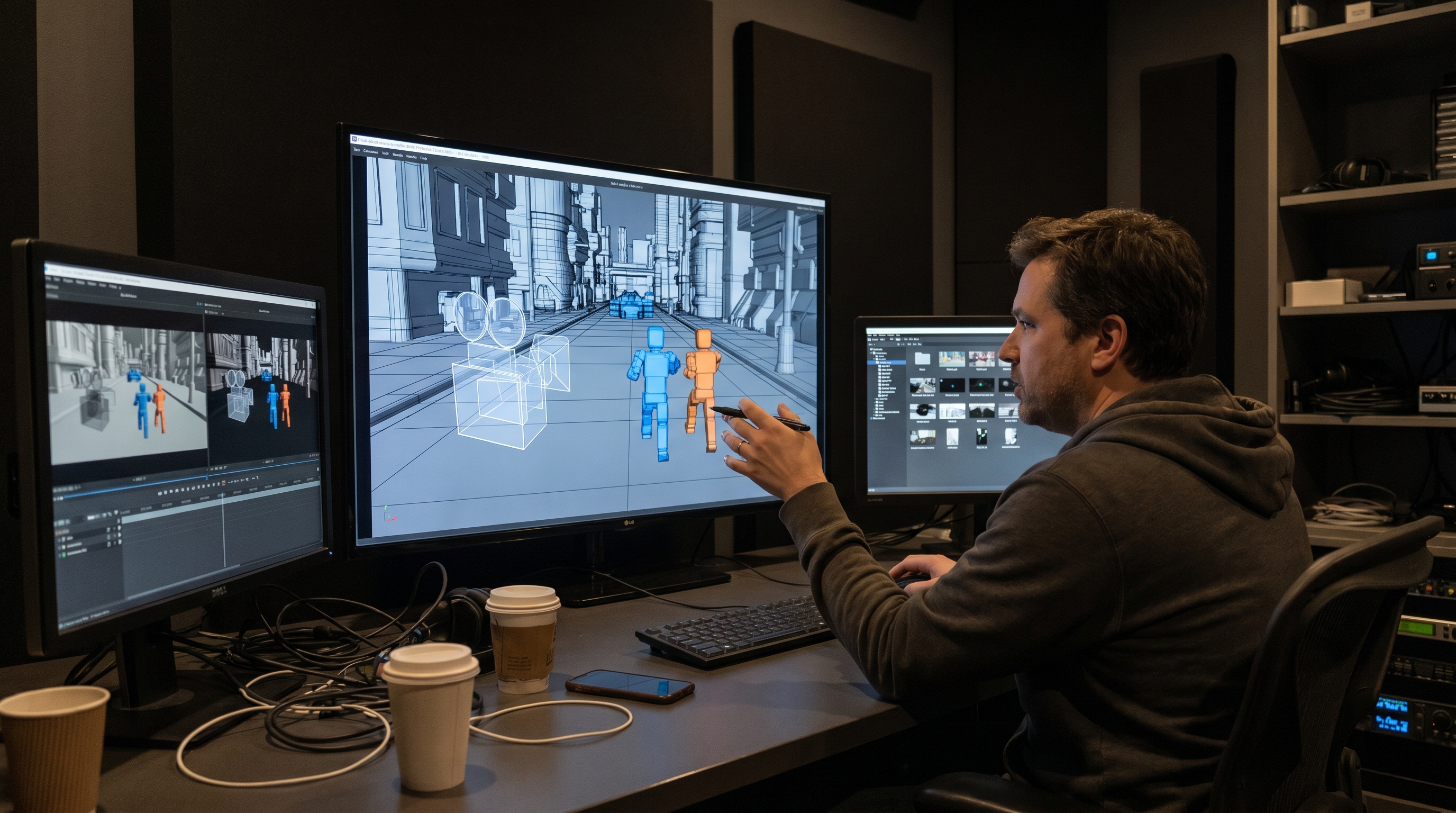
Previsualization — generating a visual representation of how a scene will look before the shoot — used to be a luxury reserved for large-budget productions. AI tools have changed that. Generating previs for a commercial shoot is now fast enough and affordable enough to be standard practice, not an optional extra.
What previs is and what it's for
Previs is not a storyboard. A storyboard shows key frames as static images. Previs shows the scene in motion — how the camera moves, how the edit flows, how the sequence of shots builds the scene. The purpose is to identify problems before the shoot day, when problems are cheap to fix.
On a shoot day, every problem costs time. Time costs money. A director who has previsualized a scene arrives knowing exactly where the camera goes, what lens they need, and how long each shot will take. A director who hasn't previsualized is making those decisions on set, with the crew standing around.
How AI previs works
The process starts with the script or storyboard. AI tools — currently including Runway, Pika, and various 3D environment tools — can generate rough visual sequences from text prompts or reference images. The quality is not broadcast-ready, but it doesn't need to be. The purpose is spatial and temporal: where is the camera, what's in frame, how does the cut work?
For more complex previs — scenes involving specific locations, specific camera movements, or precise product interaction — 3D environment tools combined with AI generation can produce more detailed simulations. This requires more setup time but produces previs that is close enough to the final shoot that the director can use it as a literal shot-by-shot guide.
What tools are used
- Runway Gen-3: Good for generating motion sequences from stills or prompts. Useful for establishing mood and movement direction.
- Pika Labs: Fast generation for short sequences. Lower fidelity but very quick for rough approximation.
- Unreal Engine / Blender: For environment simulation and precise camera movement planning. Requires more technical skill but produces the most accurate previs for complex scenes.
- FrameForge: Purpose-built previs software used by larger productions. Less AI-native but more production-workflow integrated.
Why it makes shoot days more efficient
Three specific things previs improves:
- Location confirmation: Seeing a scene simulated in a specific location reveals whether the location actually works before the scout fee turns into a location booking fee.
- Lighting plan: A rough previs with time of day approximated shows whether the natural light will be right, or whether artificial lighting is needed and in what quantity.
- Client approval: A client who has seen a previs of a scene before the shoot has already approved the visual approach. On-set surprises — and their associated costly discussions — are reduced.
The cost of doing previs for a standard commercial shoot is a fraction of the cost of one additional shoot day. It is one of the highest-leverage investments in pre-production.