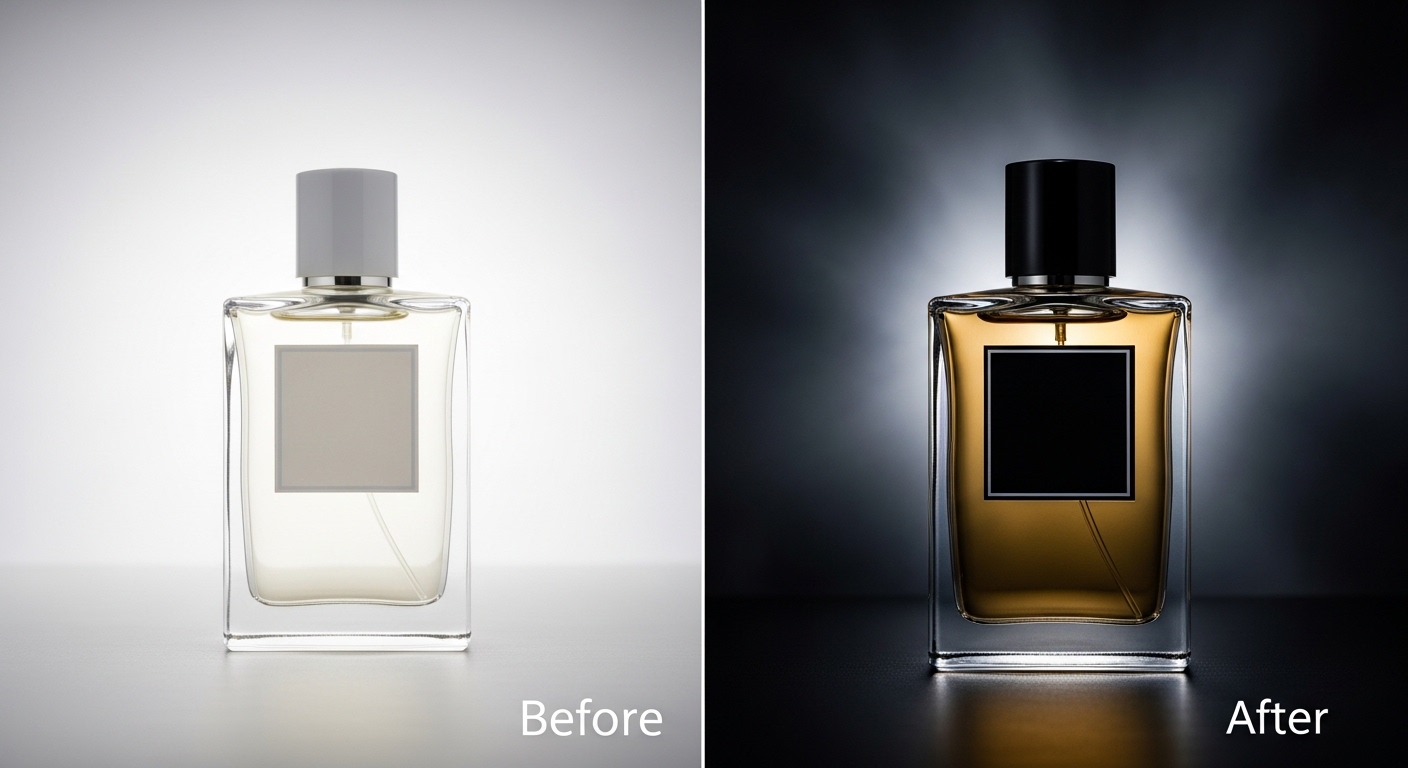
What the package includes
An e-commerce photography package is not a single frame. It is every image a product needs on its sales page. The core layer is white-background imagery. Marketplace rules usually call for a pure white or neutral backdrop, with the product centered, the shadow controlled and the edges clean. This frame shows up first on the category page and in search results, so it is the most critical part of the package.
On top of the white background come angle variations. Front, side, back, top-down and slightly perspective frames let the buyer rotate the product in their head. The inside volume of a bag, the sole texture of a shoe, the stitching on a garment — these get captured with detail macros. Lifestyle scenes place the product in a use context: a mug on a morning table, a shirt in an everyday setting. The last layer adapts the images to the right aspect ratio, resolution and file format for the marketplace and the site. Trendyol, Hepsiburada, Amazon and the brand's own site each ask for different sizes, and a good package produces all of them from one production.
The prep stage — what the brand needs to supply
The speed of the process depends heavily on prep. Three things supplied clearly up front save days at the start. The first is samples: physical examples of the products to be shot, in their sales-ready state, with labels and packaging. For products with color variants, one example of each variant should arrive; a color that turns up missing later pushes the whole shoot into a second day.
The second is the brief: how many products, how many frames per product, which angles, whether lifestyle is wanted, and which platforms the images are for. The third is references: images the brand likes, competitor examples, or frames from earlier campaigns. A reference turns an abstract request like "clean and modern" into a concrete target. When these three arrive ready, the shoot day goes straight into production; when they arrive incomplete, the first hours go to guessing.
Shoot flow and hybrid production
On shoot day the products are grouped by category. Products that need a similar setup are shot back to back, which cuts down on light and scene changes and raises the daily volume. White-background frames are taken under controlled studio light, then come the angle variations and macro details. Lifestyle scenes need a separate set build and are usually planned for the second half of the day.
The hybrid approach comes in here. Starting from one clean studio shot and generating background and scene variations with AI is the practical way to widen the lifestyle layer. The correct shape and texture of the product are captured in the studio; season, setting and color-palette variations are multiplied in the production layer. This cuts the number of set builds while raising visual variety. AI output passes through human review — the product's real color and proportion are verified on every frame.
Delivery timeline — what it depends on, typical stage durations
What everyone asking about the timeline really wants to know is: when can I put it on sale. The answer depends on the number of products, the variety of frames and the revision round. Let's take them one at a time.
A small set (roughly 10-15 products, mostly white background) typically needs one shoot day plus a few business days of post-production. A mid-sized set (30-50 products, lifestyle included) takes a day or two for the shoot and around a week for retouching and delivery. When the lifestyle and hybrid variation layer is added, post-production stretches a few more days because each scene is checked separately. The stages flow roughly like this: prep and approval a few days, shoot a day or two, selection and first retouch a few business days, revision round a few days. When we quote a timeline we talk in time, not money; settling the brand's calendar up front makes everyone's job easier.
Revisions and quality control
A good package includes the revision round from the start. After the first delivery the brand reviews the frames, gives color and composition notes, and if needed asks for specific products to be reworked. Color accuracy is the most frequently discussed topic here; the color you see on screen has to match the product's real color and not mislead a buyer on the marketplace.
Quality control runs on a technical checklist: edge cleanliness, shadow consistency, resolution, file format and platform size compliance. If a frame fails Amazon's pixel rule or the white background is not perfectly pure, the listing is rejected, so before delivery every image is checked against the target platform's requirement. When the scope of the revision round is settled in the brief, there are no surprises.
How the process scales as volume grows
When the product count goes from 50 to 200, the flow changes but the logic stays the same. At high volume the secret is standardization. With a fixed setup template, a defined frame list per product and a naming convention, hundreds of products move at a predictable pace. For brands with a constantly updated catalog, the package stops being a one-off job and turns into a periodic rhythm: each new batch of products enters the same template.
Hybrid production earns its keep at scale. Instead of re-shooting seasonal lifestyle variations for every product, generating them from existing studio frames keeps large catalogs manageable. At this point the conversation is about calendar and capacity: how many products can be processed per week, how batches are planned, in what order delivery happens.
How to start with PAM Istanbul
Starting is simple. Tell us your product count, the platforms you sell on and your calendar; we will map the package scope and a realistic delivery flow together. Whether it's a single product batch or a constantly updated catalog, we work with the same discipline: transparent process, verified color, platform-ready output.
Let's build this together.
Whether it's a single product batch or a constantly updated catalog, we bring the same playbook that works for Cartier, Mercedes-Benz, Nike and Pierre Cardin. We work transparently with your team as we deliver — documented process, verified color, no black boxes.
Email: [email protected]
Phone: +90 530 267 49 29
Studio: Yayıncılar Sok. 10/3, Seyrantepe · Istanbul