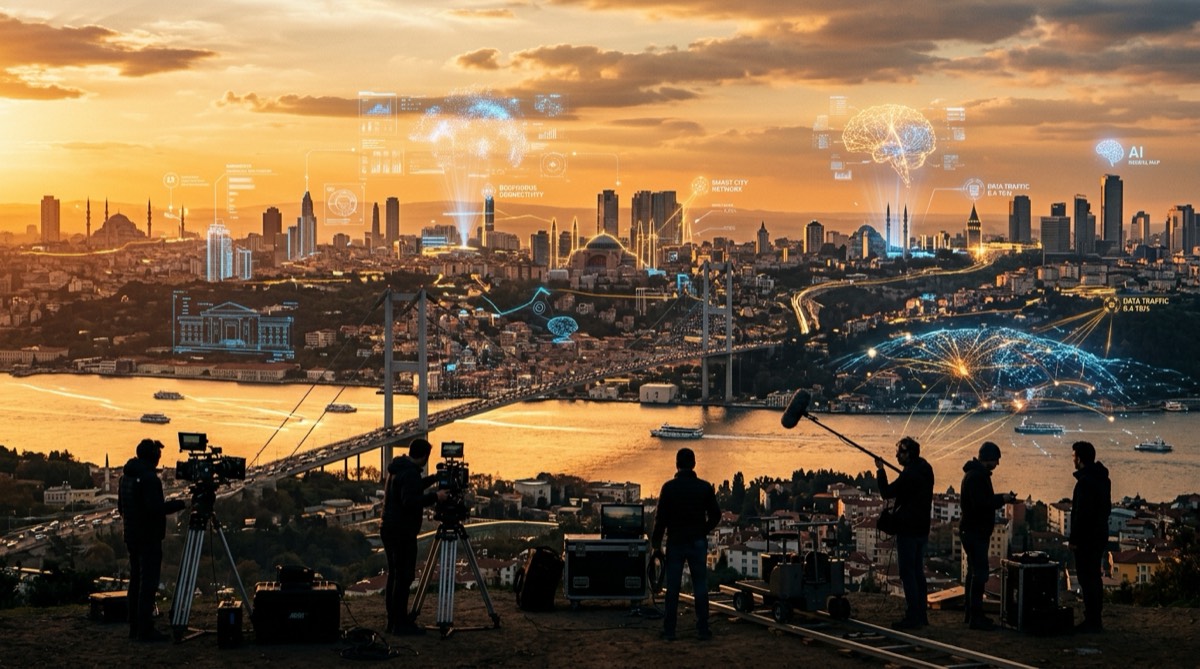
How does a commercial begin? Usually with an email. "We need a campaign shoot this season — budget is X, delivery is Y." From that first message to the moment footage hits a screen, there are more steps than most brands realize. Here's every one of them, in order.
The brief: where everything starts
The brief is the constitution of a production. Without a clear brief, the creative team heads in the wrong direction, the producer quotes the wrong budget, and the director makes the wrong aesthetic choices. A good brief answers: Who is this for? What are we saying? How should it feel? Where will it run? When does it need to be delivered?
In practice, most briefs answer maybe half of those questions. The agency or production company fills the gaps — which always carries risk. If the brand doesn't know what it wants, revision requests after the shoot become inevitable.
Creative development
Once the brief is approved, the agency or director develops the concept. Three things get produced at this stage:
- Treatment: The director's written vision for the film — aesthetic references, atmosphere, camera approach.
- Storyboard: A shot-by-shot visual sketch — composition, character positions, movement directions.
- Animatic: Storyboard frames assembled with rough narration and music. Critical for letting the brand actually "see" the film before a camera rolls.
Going into production without these three documents is like driving in an unfamiliar city without a map. Possible, but needlessly risky.
Pre-production: 3–6 weeks before the shoot
Once approved, the real work begins. Pre-production runs multiple tracks simultaneously:
- Location scouting (recce): The team photographs and assesses locations — light conditions, noise, permit requirements.
- Casting: Actor selection. The agency is usually in the room; the brand makes the final call.
- Crew: Director, director of photography (DoP), art director, costume, makeup, sound, production assistants.
- Permits: Location permits, municipality approvals, traffic management, drone permits if aerial shots are involved.
- Equipment: Camera, lenses, lighting, generator, crane or drone.
The better this phase is planned, the smoother the shoot. Problems on shoot day are almost always pre-production failures.
Shoot day
On the day, everyone works from the call sheet — a document detailing the scene order, crew call times, location address, and emergency contacts. In a professional production it's distributed at least 24 hours before the shoot.
Scenes are usually shot not in chronological order but in order of efficiency — organized around location, lighting setup, and cast availability. The edit puts them in the right sequence afterward.
Post-production
The shoot is done. The work isn't. Post typically covers at least half of total project time:
- Offline edit: Raw footage is selected and assembled. Multiple rounds of approval.
- Online (color + VFX): Color grading, visual effects, graphic elements.
- Sound: Voiceover, sound design, music licensing or original composition.
- Deliverables: Outputs for each channel — broadcast master, digital formats, social cutdowns, subtitled versions.
Delivery and broadcast
After final approval, the technical deliverables go out. At that point the production's lifecycle is technically complete — but broadcast performance tracking continues. A good production team doesn't disappear at delivery. They stay ready for format conversions, social adaptations, and additional versions.
Brief to screen: on average 6–12 weeks. Rush it and quality drops. Let it run long and the budget climbs. The best teams plan every step before the first camera rolls.