What AI product visuals actually do well
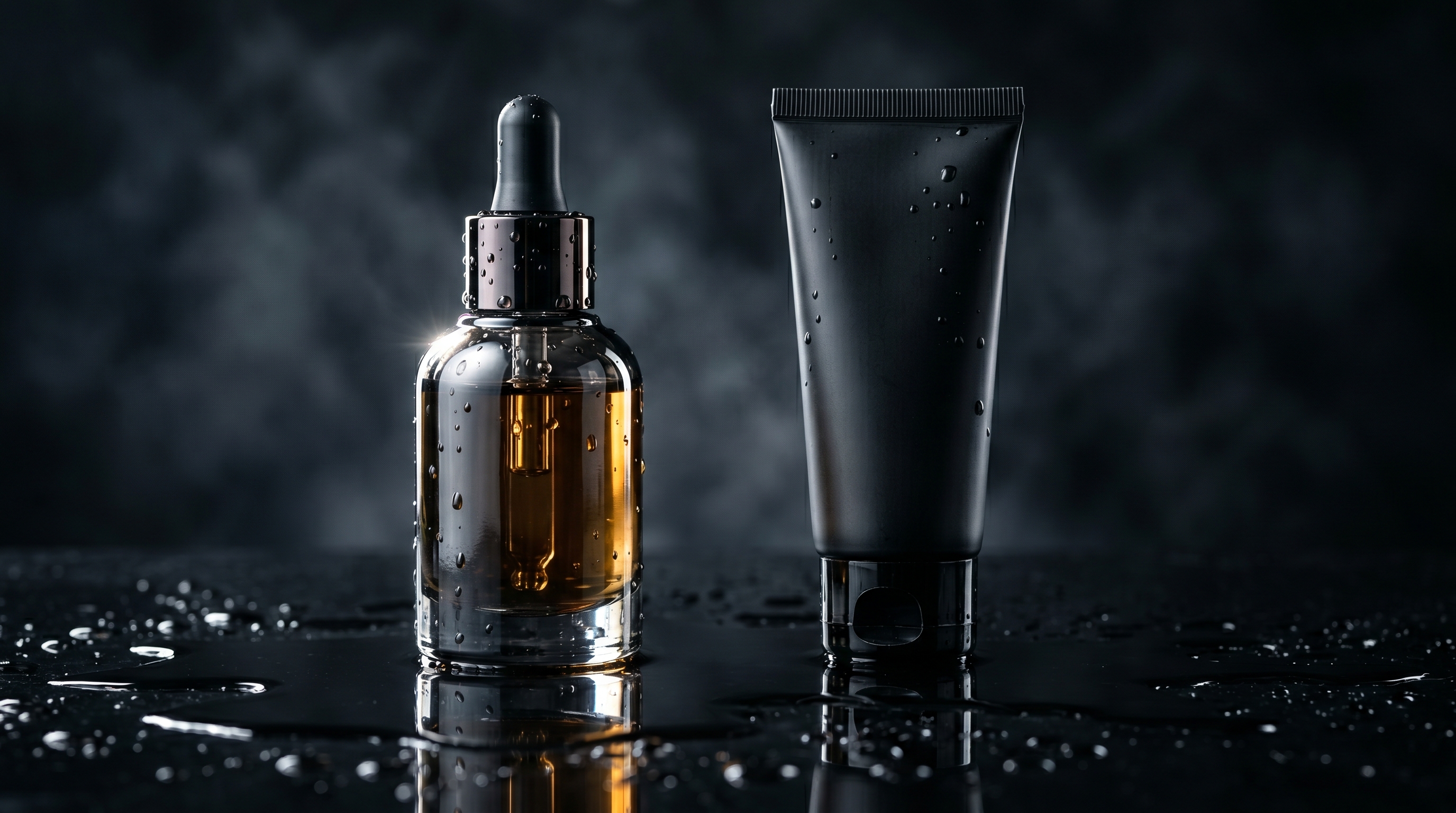
Over the past two years AI image generation has grown able to carry a real share of product photography. If you have a clean product reference, the model can place that product into dozens of different scenes. A perfume bottle from a single shot can appear on a marble counter in morning light, in a bar scene with evening tones, and on a flat studio backdrop on the same day. For an e-commerce catalog this is a big help; keeping hundreds of SKUs consistent in one visual language is now a matter of hours rather than days.
Where AI really wins is variation volume. If you want to run an A/B test for a campaign, you can generate the same product against five backgrounds and three color temperatures and measure which converts better. On a traditional set that means five separate setups. On the AI side it's an afternoon. Seasonal content, the social calendar, and fast campaign visuals are where AI works most comfortably.
Where real set photography still belongs
Nobody has replaced the set shoot, because some things genuinely require being there. The texture of a fabric, the pore of a skin, the true reflection on a glass surface — these come out of the physics of light. The metallic shimmer on a luxury watch dial, the stitch detail on a leather bag, the fresh surface of a food product: when these are shot on a set, the viewer feels the difference, often without being able to name why.
Trust is part of this too. A consumer wants to actually see a product, and in the high-price segment especially, the question "is this image real" shapes the buying decision. For luxury brands, jewellery, watches, and products with high material value, a set shoot is not just a production method but a statement of the brand's honesty. Holding a product, turning it, finding the right angle, watching how the material speaks to light — that is still the work of a person and real light.
Where AI still stumbles
There are limits you should know before you put AI into a catalog. Reflective surfaces are the first. Glass, chrome, polished metal — models produce illogical reflections on these: a window that isn't there in a perfume bottle, an inconsistent light in a watch crystal. The second issue is anatomical and mechanical detail: the lace path of a shoe, the tooth alignment of a zipper, the finger count of a hand still need control.
The third, and most critical for brands, is brand consistency. Getting a logo at exactly the right proportion, an on-pack text legible and correctly spelled, a product's color code matched to Pantone precision is hard for AI. The model gives you an "approximately right" result, not the "exactly right" the brand wants. So AI output usually isn't publish-ready before it passes through a post-production layer. Generating is fast, but reviewing and correcting takes time.
Comparing on speed, scale and risk
We can compare the two clearly without talking money. Speed: AI gives first drafts in minutes; a set shoot needs planning, setup, and a shoot day. But the correction loop on AI output can drag, while a set with the right setup can finish in one pass. Scale: if you need hundreds of thousands of images, AI is plainly ahead; for a single hero image, the set shoot is more predictable.
Risk: the balance here is interesting. AI's risk sits in consistency and brand fidelity; there's no guarantee that dozens of images across a campaign hold the same quality. The set shoot's risk sits in logistics; weather, location, and product delivery can slip. An experienced team manages both. The question we ask is this: how small does this image's margin of error need to be? If it's near zero, the set wins; if flexibility leads, AI wins.
Which product and campaign calls for which
A practical decision guide. Choose the set shoot for luxury products, jewellery, watches, textiles with real texture value, food and drink, hero campaign images carrying brand identity, and any case where the product's reality sits at the center of the sale. Choose AI generation for broad e-commerce catalogs, seasonal background variations, social content volume, the concept and moodboard stage, A/B test visuals, and fast campaign iterations.
There are grey areas too. Cosmetics and care products sit between the two: the main product can be a set shoot, the lifestyle variations can be AI. Fashion is the same; the garment itself is real, its scene can be AI. The only question we ask when deciding is: what does the viewer expect to be real in this image? If the answer is "the product itself," that part goes to the set.
Hybrid: combining the two
In reality the strongest workflow isn't choosing but combining. In the hybrid approach the product is shot on a real set, with correct light, on a clean backdrop; then AI carries that real product into different scenes, seasons, and atmospheres. The product's texture and reality are preserved while variation volume is handed to AI's speed. You shoot a watch correctly once, then show it across dozens of scenes from a winter morning to a summer evening.
This model gives brands the most balanced result. Reality where reality is expected, flexibility where flexibility is needed. When the post-production team uses the real shoot as reference, the brand fidelity of the AI output rises noticeably too; the model no longer "guesses," it carries the real material it was given.
The PAM Istanbul approach
We make this call from scratch on every project. First we understand the product and the campaign's purpose, then we decide together which layer is produced on the set and which in AI. The discipline that works for Cartier, Mercedes-Benz, Nike and Pierre Cardin applies here too: transparent process, documented decisions, a flow where it's always clear how each image was made. Our aim isn't to win the "AI or set" argument but to meet what your brand actually expects from that image.
If you're not sure which approach fits your product, let's clear it up together in a 30-minute discovery call. Most of the time the answer turns out to be the right blend of both.
Let's build this together.
Whether it's a single campaign or a year-long production partnership, we bring the same playbook that works for Cartier, Mercedes-Benz, Nike and Pierre Cardin. We mentor your team as we deliver — transparent process, documented AI decisions, no black boxes.
Email: [email protected]
Phone: +90 530 267 49 29
Studio: Yayıncılar Sok. 10/3, Seyrantepe · Istanbul