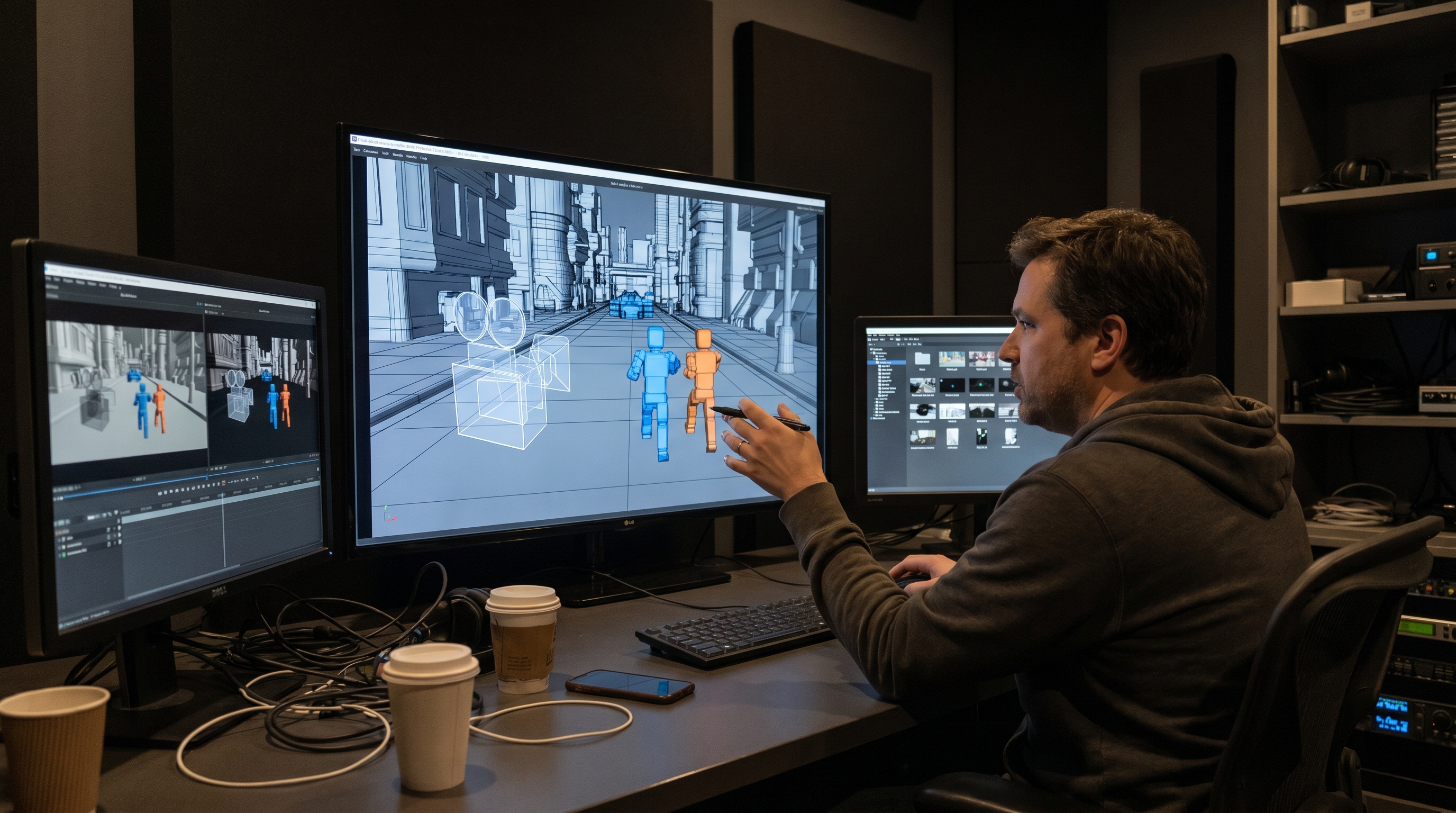
Pre-visualization — previs — has existed in film production for decades. Traditionally it meant hand-drawn storyboards, rough 3D animatics, or expensive previsualization software operated by specialists. AI video generation has changed the cost curve dramatically. It is now possible to simulate a scene before the shoot at a fraction of the previous cost and in a fraction of the time.
What previs actually solves
Previs answers one question: does this scene work the way we think it does? Camera angle, blocking, lighting approach, pacing — all of these can feel obvious in a storyboard and wrong on set. Previs lets the director, producer, and client experience something closer to the actual film before committing crew and equipment costs to a full shoot day.
The value is not just aesthetic. A director who has simulated a scene has resolved dozens of micro-decisions before arriving on set. That reduces the exploratory time that burns budget on shoot days.
Sora, Kling, and Runway: what each does well
Sora (OpenAI) generates high-quality video from text prompts with strong temporal consistency — scenes tend to hold together over time without the object drift that plagued earlier tools. It is well-suited for establishing shots, wide scenes, and atmospheric simulations.
Kling (Kuaishou) handles motion with particular fluidity and has become a preferred tool for scenes involving people walking, running, or interacting. Its realism in mid-range human motion is currently ahead of most competitors.
Runway Gen-3 sits between the two and adds strong video-to-video capability — meaning you can take existing reference footage and use it as a structural guide for the AI output. This is useful for directors who have a specific visual reference they want to adapt rather than generate from scratch.
What AI previs cannot do
AI video tools are not reliable for precise shot matching when exact lens focal lengths matter. They do not simulate physical lighting rigs accurately. They cannot produce output that functions as the final commercial — the quality gap between AI previs and camera-originated footage remains significant for most production contexts.
AI previs is a communication and planning tool, not a production tool. Treating it as anything more leads to either disappointment or decisions that create problems downstream.
Integrating AI previs into production workflow
The most effective integration point is between treatment approval and the pre-production meeting. Once the director\'s approach is agreed, AI previs can simulate key scenes before the PPM, giving everyone a shared visual reference before locations, casting, and equipment are locked.
A day invested in AI previs before a three-day shoot can save a half-day of on-set exploration. At Istanbul production day rates, that is a straightforward return on investment.