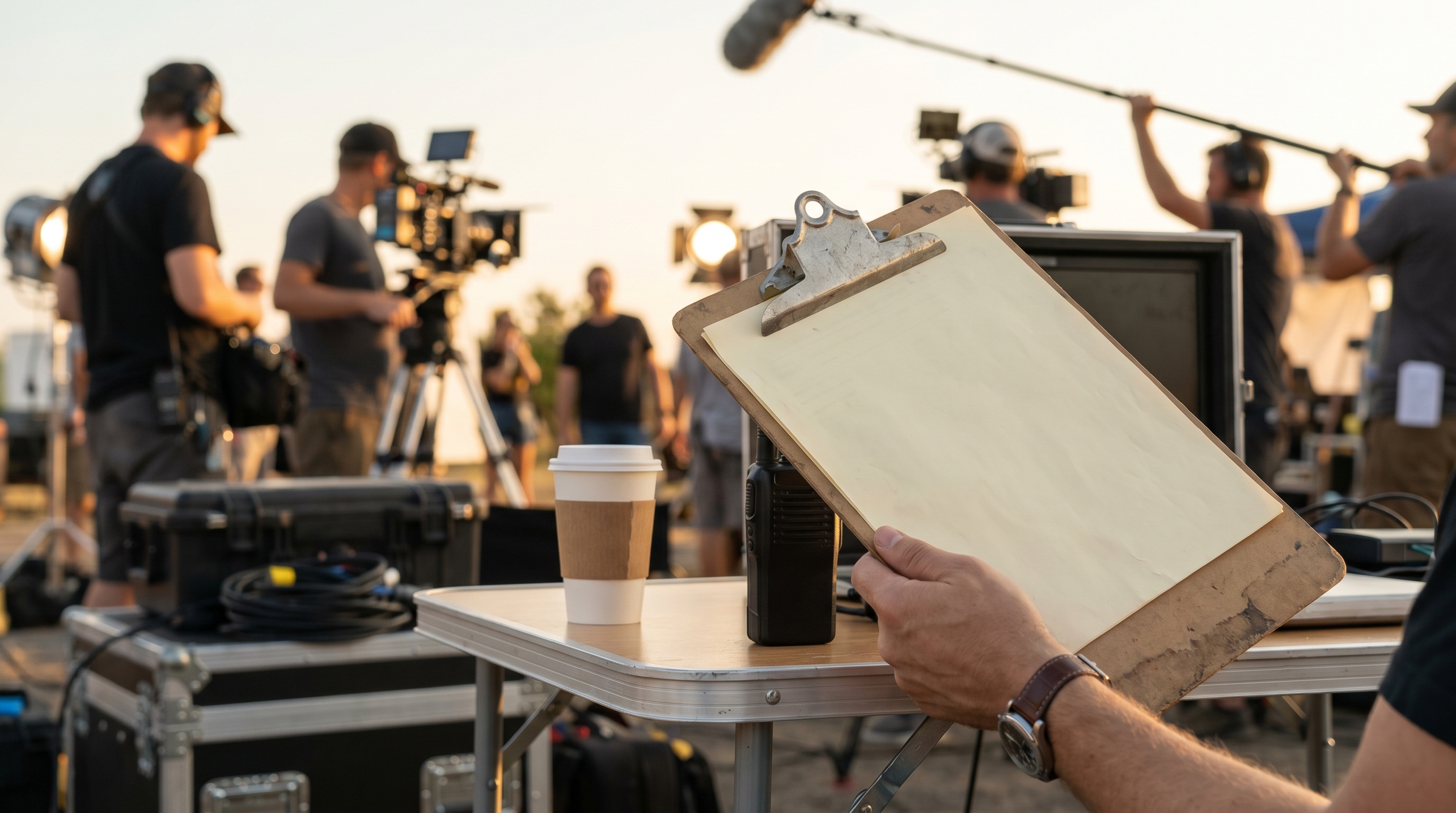
The call sheet is the operational document that governs shoot day. Every crew member, every piece of equipment, every scene, every location, every call time — all of it lives in the call sheet. If the brief is the foundation of a production and the treatment is its vision, the call sheet is its constitution on the day the camera rolls.
A good call sheet is invisible: it does its job so well that no one thinks about it. A bad call sheet becomes visible immediately — through late crew, wrong equipment, missed location details, and the particular frustration of a set that knows something is wrong but cannot pinpoint what.
What a call sheet contains
The standard commercial production call sheet includes: general shoot information (date, location, nearest hospital and emergency contacts, weather forecast), crew list with individual call times and roles, talent list with call times and any special requirements, shooting schedule with scenes in order, location details and parking, equipment list summary, and catering and transport logistics.
Each of these sections serves a specific function. The crew list with individual call times tells each person when to arrive. The weather forecast enables contingency planning. The hospital contact is there for insurance and safety compliance — and occasionally for actual use.
When the call sheet goes out
The call sheet should be distributed the evening before the shoot — ideally by 6 PM, giving crew time to review, prepare, and ask questions before the morning. A call sheet that arrives after midnight is only marginally better than no call sheet. Crew who have not reviewed their call times, location details, and equipment notes before arriving on set create friction from the first hour.
What goes wrong with bad call sheets
Wrong call times for key crew members. Missing scene breakdowns that leave the camera department unprepared for the first shot. Location address that leads to the service entrance instead of the production entrance. Talent allergies or restrictions not communicated to catering. These errors are individually minor; collectively they add up to a slow, expensive, frustrating shoot day.
The call sheet is where the producer demonstrates their grasp of every detail of the production. It is read more carefully by experienced crew than almost any other document — because experienced crew know exactly what happens when a call sheet is wrong.
The call sheet as an alignment tool
Beyond its logistical function, the call sheet is a final alignment document. Building it forces the production manager to confirm every detail: is the equipment order confirmed? Is the location accessible at call time? Is the scene order optimised for light and location? These questions, answered while building the call sheet, surface problems before they arrive on set rather than during the shoot day.